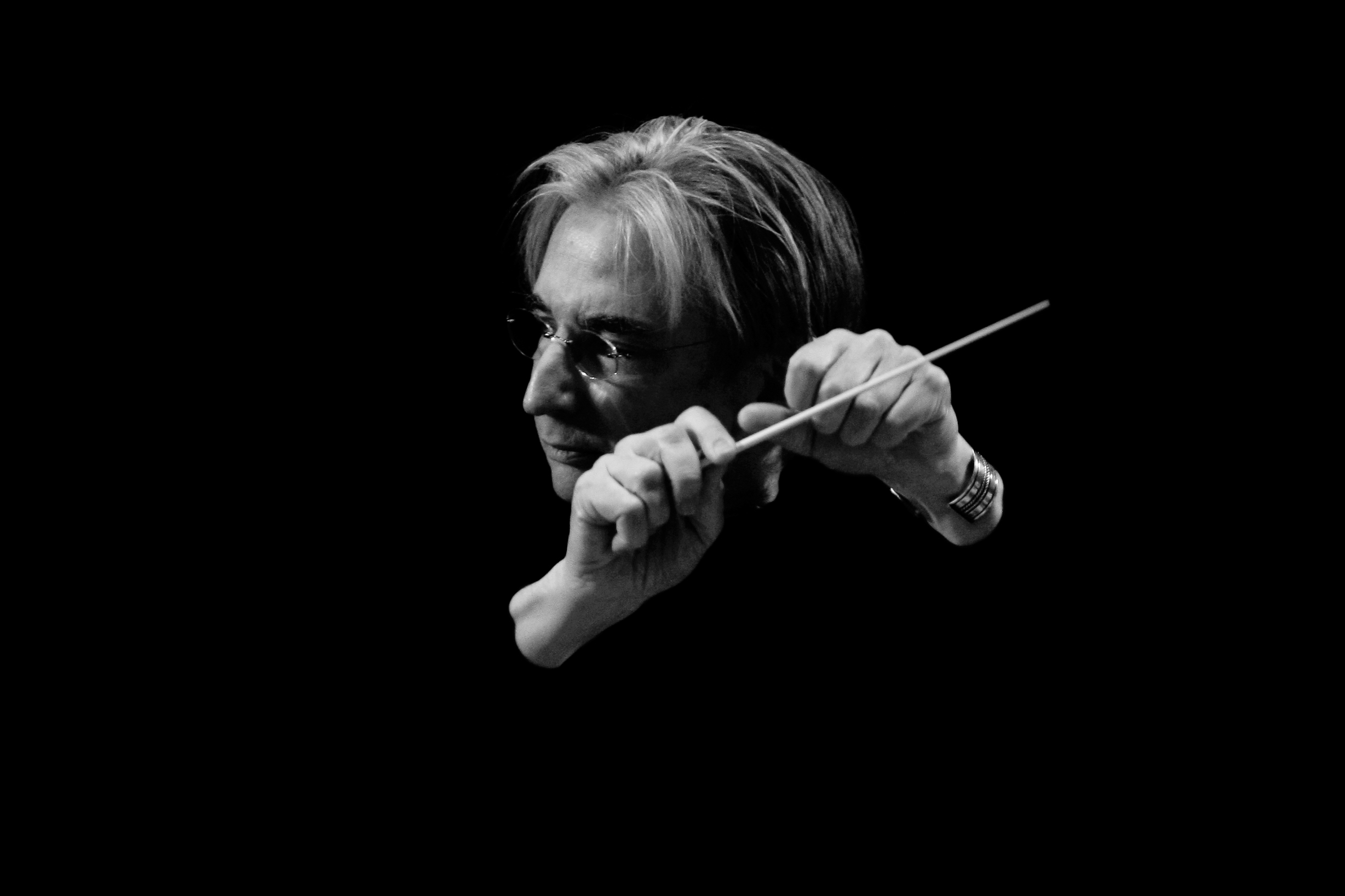
One of the great conductors and musical educators of our time, and a staunch promotor of contemporary music, Michael Tilson Thomas — or MTT, as many people knew or referred to him — has passed away.
Below a few episodes from MTT's acclaimed and much loved "Keeping Score" series.
I apologize in advance that I’m about to make this about me, although it is indirectly a tribute to the kind of person that Michael Tilson Thomas was. Even though I never met him, he had a profound impact on my life. It happened when I was in college in the 70s…
My dad was a tenured professor at Arizona State University, and one of his job benefits was that his wife and children could attend school there at a greatly reduced cost. I decided to enroll as a music major there and was able to graduate from ASU with no college debt. Before my final year of college, I decided to spend a summer in Los Angeles; and I enrolled in classes at the University of Southern California to study orchestration, choral conducting, and instrumental conducting.
For instrumental conducting, we usually conducted our professor while he played piano in reaction to our baton movements; but for our final exam, our teacher assembled a chamber symphony orchestra for us to conduct. What an unexpected thrill that was! The whole class gathered around after the experience, sharing our joy and lamenting that we might never experience it again.
Then our teacher said, “You know, when Michael Tilson Thomas was a student here...” “Wow! Michael Tilson Thomas went to USC?” someone exclaimed. “Yes, when Michael Tilson Thomas was a student here, he’d go to the library and find scores he wanted to conduct. Then, he’d hang around the music department and hustle students into playing for him; and he’d give concerts on the mall. If you really want to conduct again, you’ve got to find a way to make it happen.”
Inspired, I returned to ASU determined to conduct again. Having studied both orchestration and conducting at an excellent music school, I had all of the tools I would need for what was to happen next.
I thought a lot about what Michael Tilson Thomas did and how I might adapt that to help fulfill my own aspirations as a composer. It turned out that ASU had a program that was perfectly suited for my idea. The music department offered an independent study elective that could be used for college credit toward my major. It allowed students to create their own course and teach themselves, as long as the department approved their course idea.
I went to the music department and pitched the following idea: I would write and conduct a composition for chamber symphony orchestra and find the players to perform it. Not surprisingly, my idea was met with skepticism. How could I pull something like that off? I told them what Michael Tilson Thomas had done at USC, and I also offered to pitch my idea to other composers to see if we could team up to enlist players. Fortunately, I found another composer who was willing to try this approach to independent study; and the department approved my proposal.
One advantage of attending ASU is that it was, and still is, one of the largest universities in the United States. At the time that I was a student, there were roughly 47,000 students enrolled. This gave the other composer and me a fighting chance of finding enough students who would be willing to join our chamber orchestra.
Even so, it was hard. We couldn’t offer our players any pay or class credit, just the chance to perform new music. The two of us spent our free time roaming the practice room hall, looking and listening for students who might fit in with what we wanted to accomplish. We pitched our idea to anyone who would listen; and amazingly, we eventually found 30-40 students with the right instrumentation who were willing to participate.
The music department assigned us a rehearsal space for two or three sessions per week; but now, we needed material to conduct! We started writing at a maddening pace. I remember spending about three hours a day just handwriting the parts I had composed, my hands cramping up and getting callused from holding pencils and pens. I also had to find the time to practice conducting before rehearsals, and all of this work was in addition to the rest of my full-time course load! Nonetheless, I loved it: we were inspired and driven, and we knew we were accomplishing something special; and at the end of the semester, I conducted in concert my first movement of my first symphony.
For my final semester at ASU, I went back for more. The other composer and some of the players dropped out, but I found two other composers to team up with and we repeated the process, culminating in each of us conducting our own orchestral works for our senior recitals.
At my graduation ceremony, the Dean of Fine Arts made special recognition of my achievement. Nothing like this had ever been done before at ASU. I felt empowered as I prepared to finally leave the education system. This was, and still is, one of the highlights of my life.
It also had an important impact on my future, leading me to do orchestrations for Michael Jackson; but that’s another story. The point of this post is that Michael Tilson Thomas inspired me to do something that profoundly changed my life for the better; and for that, I am forever grateful.
Who I was at Boston Conservatory of Music in the late 60's, he was the assistant conductor. I got to see him many times and it was obvious then how good he was.
Charlie Clouser: " I have no interest in, and no need to create, "realistic orchestral mockups". That way lies madness."
My grandfather had strong opinions about conductors, and he could defend them. For the most part he preferred "seasoned" conductors, his two favorite being Eugene Ormandy and Leopold Stokowski (we lived in Philadelphia<G>) He also like Bernstein, but felt he could be a little nicer to everyone. If I were to go through my record collection I'd find several others that were suggestions from my grandfather.
I had discovered MTT through a friend, and often thought about introducing my grandfather to some of his work. Never did. Didn't need to... one day he told me he had discovered this "child" conductor, and I needed to listen to some of his work.
I've always enjoyed his educational videos, and really any interviews with him. He was a remarkable man.